eHealth and Electronic Health Records
Medical device funding in Australia needs to change
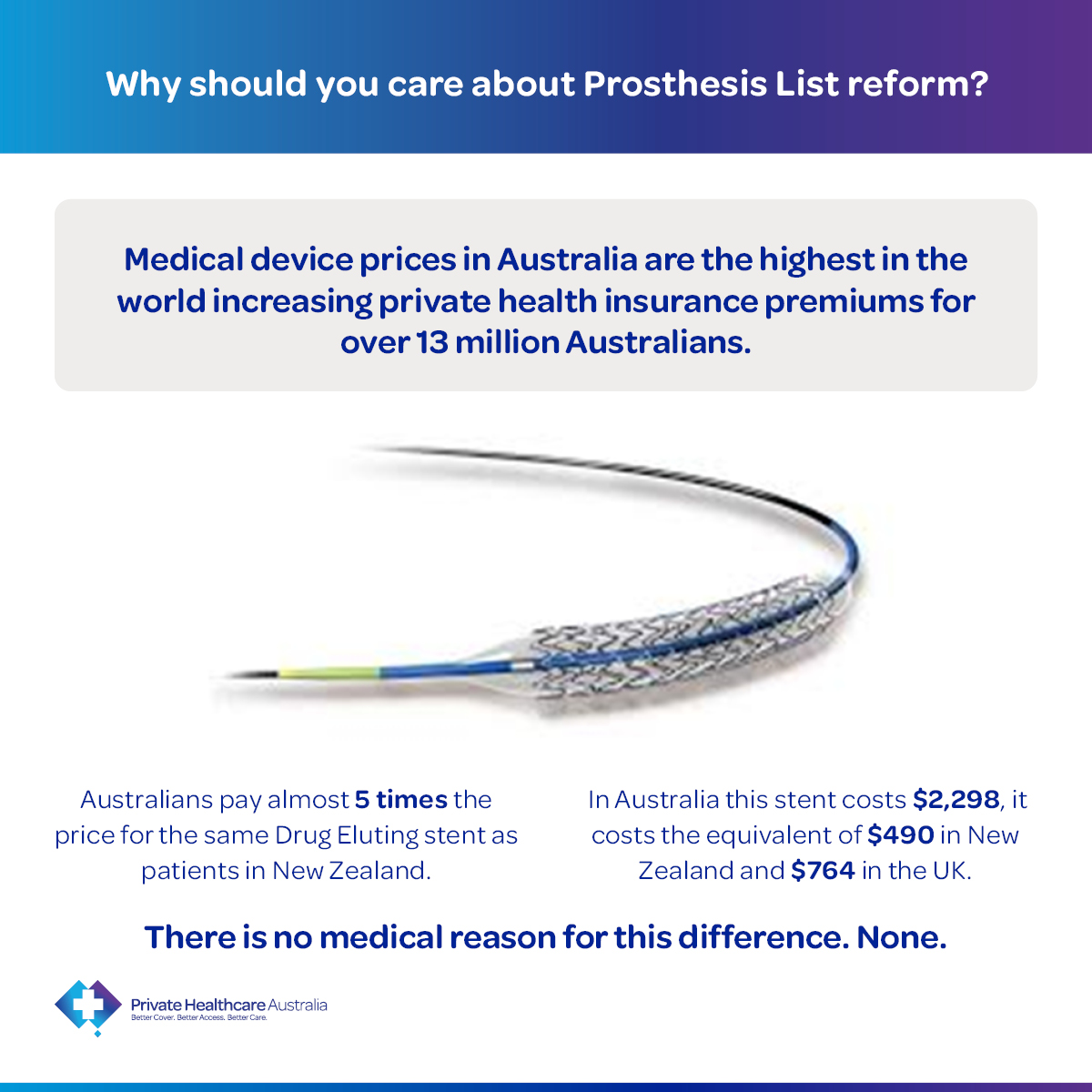
Medical device prices in Australia are the highest in the world. Medical devices used in hip, knee and shoulder surgeries are 30-40% more expensive here than in New Zealand, the UK or France.
The Prostheses List sets prices for more than 11,000 items, with no transparency, no market mechanisms and no consideration for the impact on Australian consumers.
Private health funds are required to pay the list price for items on the Prostheses List regardless of quality, efficacy, efficiency or safety.
Australian consumers pay more while the medical device companies pocket excessive profits.
PHA has developed a blueprint for reforming prostheses funding in Australia, which redistributes excessive profits from multinational medical device companies to Australian doctors, Australian hospitals and Australian families.
Health funds have committed to pass on any savings, as a consequence of these reforms, to consumers as a reduction in premiums.
The problem
- Medical device prices in Australia are the highest in the world.
- The Prostheses List is prone to error and rorting, with 11,000 individual components listed.
- Even common devices such as knee replacement parts or drug-eluting stents are more than twice the price of some comparable markets.
- Medical device cost growth is the largest factor in premium increases for Australian families with private health insurance.
The challenge
- Shift some of the extraordinary profits from multinational device companies to Australian consumers, doctors and hospitals.
- Ensure continued access to medical devices that save and improve lives.
- Reduce rorting and increase transparency.
Our solution
- Move to bundled payments rather than paying list prices for individual components.
- Introduce independent pricing for bundled payments, with competition between providers.
- Allow hospitals to negotiate on price to secure better value.
What will happen with our plan?
- The Independent Hospital Pricing Authority will review prices in the public system and overseas and set a bundled price by procedure.
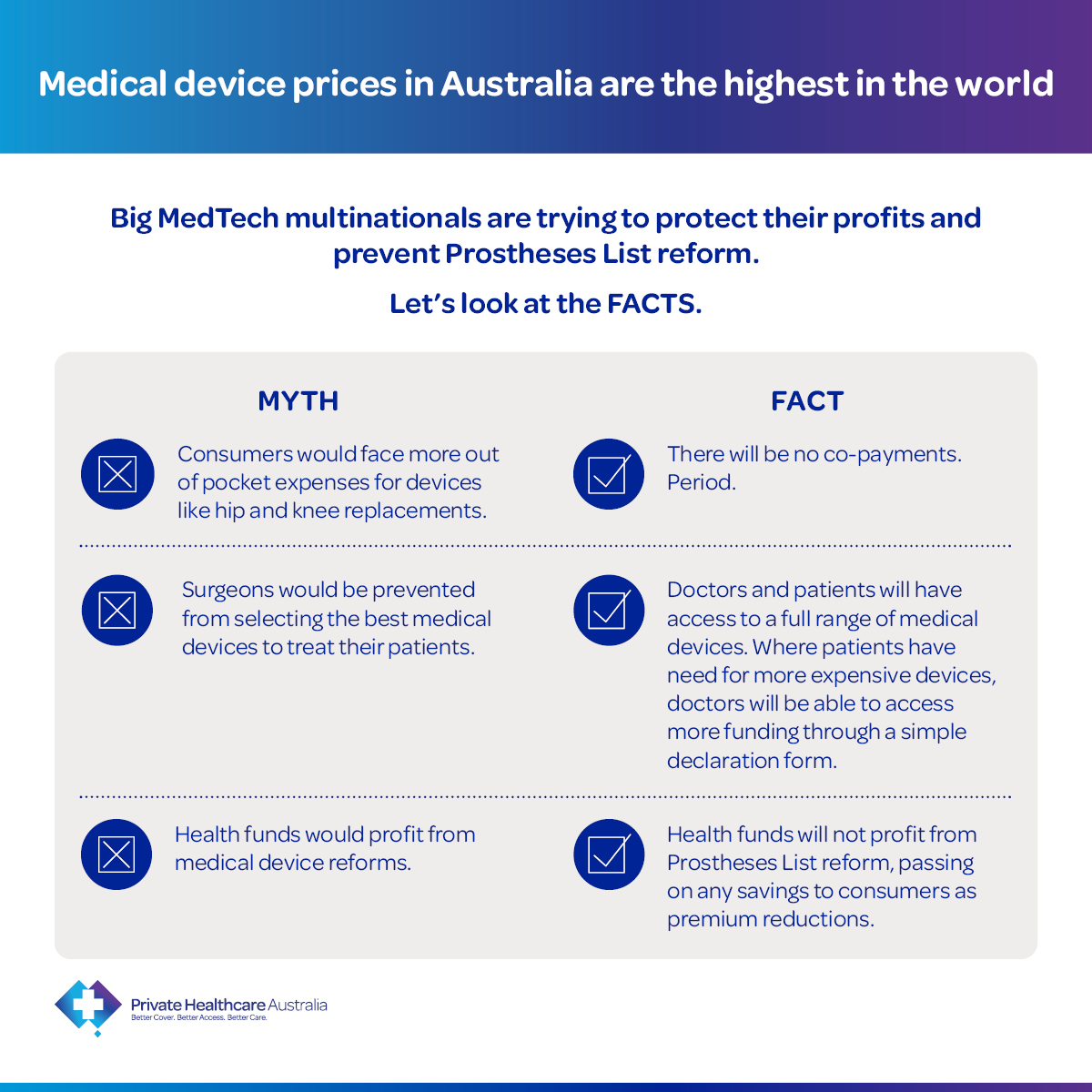
- Doctors and patients will continue to have access to a full range of medical devices (maintaining choice).
- There will be no co-payments.
- Where patients require more expensive devices than average, doctors will be able to access additional funding through a simple declaration process.
- Medical device costs in Australia will fall gradually, although prices may remain among the highest globally for some time.
- The plan is expected to save about $500 million by the fourth year, shared between consumers and hospitals.
- Health funds will not profit from any savings generated by this reform.